
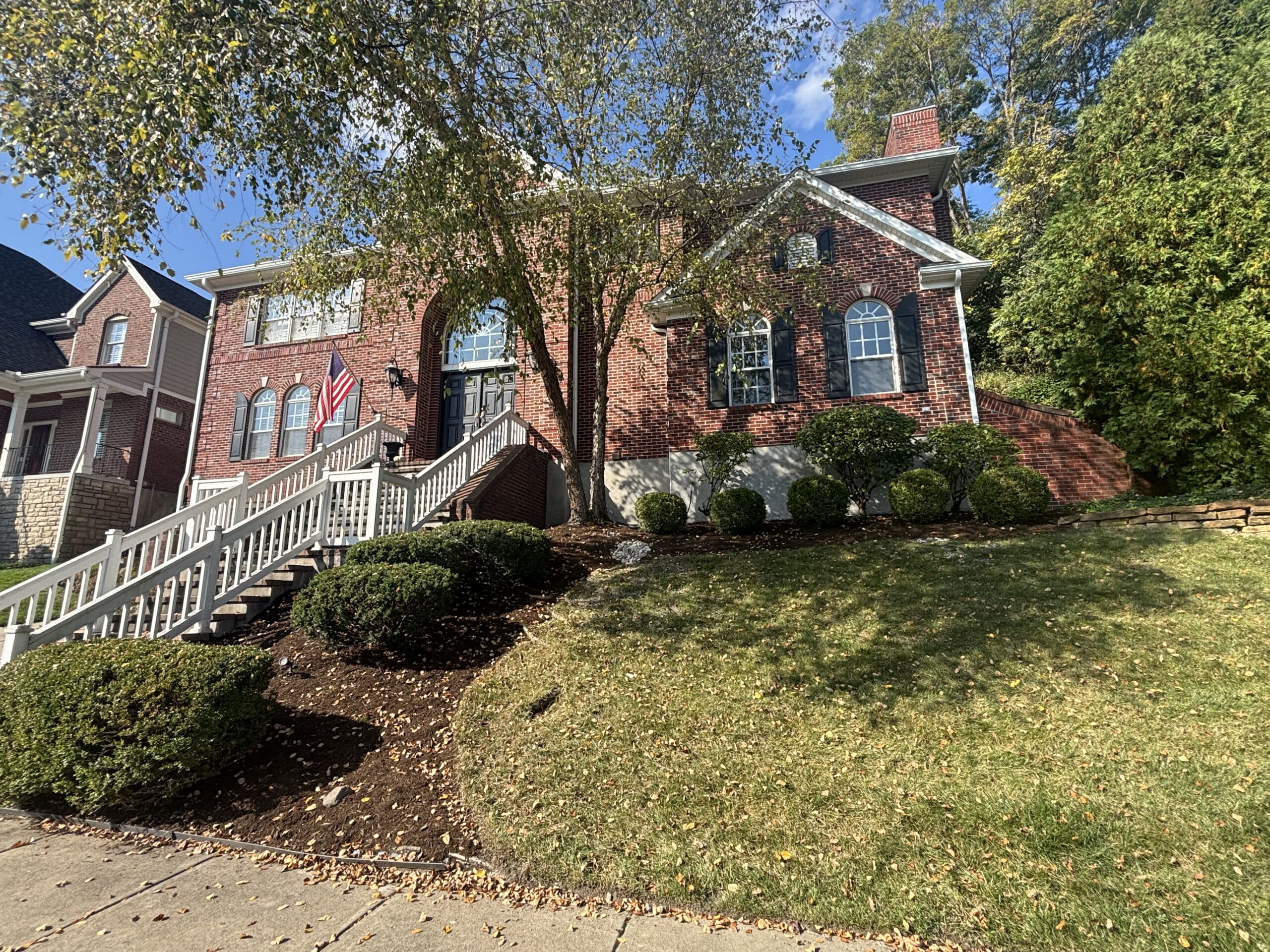
November sits in an awkward spot for most Cincinnati homeowners. The active lawn care season feels like it is over, but there are still things that need to happen before the property is actually ready for winter. The question is knowing which tasks still matter, which ones can wait, and which ones people tend to skip that they really should not.
Here is a straightforward guide to what November actually calls for on a Cincinnati lawn, and why each piece of it matters.
Cool-season turf in Cincinnati — tall fescue, Kentucky bluegrass, and perennial ryegrass — goes through a gradual shutdown in November rather than stopping all at once. Above-ground growth has essentially stopped for most lawns by early to mid-November. But below the surface, root activity continues as long as soil temperatures stay above freezing, which in Cincinnati often runs well into late November in mild years.
This matters because it means the lawn is not completely dormant yet. It is still taking up water and nutrients at the root level. How the property is managed during this transitional period has a direct effect on how it comes out of winter and how quickly it recovers in spring.
This is the most time-sensitive November task and the one that causes the most problems when it gets skipped or pushed too late.
Leaves that get covered by the first snowfall and sit on turf through the winter create a dense, wet mat that blocks light, traps moisture, and produces exactly the conditions that lead to snow mold and other fungal issues. When the snow melts in March, the damage underneath tends to show up as matted, discolored, or dead patches that can take weeks to recover.
The goal is not to keep the lawn perfectly clear at all times through November. It is to make sure a significant accumulation is not sitting on the turf when the first real snowfall arrives. For Cincinnati properties with heavy oak or sweetgum canopy, that means at least one thorough removal in November even if the trees are not completely bare yet.
Late-dropping species like oaks can hold leaves well into November, so do not assume the cleanup window has closed just because most of the other trees on the street are already bare. Stay on top of it through the month.
The ideal window for late fall fertilization in Cincinnati is mid-to-late October. If that did not happen, early November is still workable as long as soil temperatures remain above freezing and the product can be watered in.
This application matters more than any other fertilization of the year for cool-season turf. The lawn uses the nutrients to build carbohydrate reserves and develop root depth before going fully dormant, and those reserves directly determine how early and how strongly the lawn comes back in spring. A slow-release formulation with a higher potassium content is the right product for this timing.
Once the ground freezes, fertilizer cannot be taken up by the root system and the window is closed. If late October fertilization was skipped, make it a priority in early November before the soil hardens.
Do the Final Mowing at the Right Height
Most Cincinnati lawns stop requiring regular mowing sometime in November. The final cut of the season should bring the turf down to around two and a half to three inches. This is slightly lower than the four-inch summer height but still leaves enough leaf material to protect the crown of the grass plant through freeze-thaw cycles.
Leaving the lawn too long going into winter creates conditions where snow mold can develop under persistent snow cover. Cutting too short on the final mow exposes the crown of the grass plant and increases the risk of freeze damage. Two and a half to three inches threads the needle between both problems.
Do not mow on an arbitrary date. Mow when the lawn has actually stopped growing and needs it. In Cincinnati, that can range from late October in a cold fall to mid-November in a mild one. Watch the growth rather than the calendar.
Clear Landscape Beds Before the Ground Freezes
Beds that go into winter carrying significant debris — leaves, seed heads, dead plant material — create two problems. First, the debris traps moisture around plant crowns and stems, which promotes the crown rot and fungal issues that damage perennials and shrubs over winter. Second, weed seeds that were not cleared in fall germinate in spring, adding to the weed pressure the following season.
A fall bed cleanup does not need to be aggressive. The goal is clearing debris and spent plant material, not cutting back every perennial to the ground. Many perennials benefit from leaving some structure standing through winter — the seed heads provide food for birds and the standing stems help insulate the crown. What should come out is anything diseased, anything that has gone to seed and will create weed issues, and the bulk of leaf accumulation that has settled into the beds.
Mulch in beds should be assessed at this point. If mulch has thinned significantly through the season, a light top-dressing of an inch or so going into winter helps insulate root systems against freeze-thaw cycles. New mulch installation is better timed for spring, but a thin layer added in fall over an already-mulched bed is a reasonable winterization step.
Knowing what not to do in November is just as useful as knowing what to do.
Winterize the Irrigation System
For properties with in-ground irrigation, blowing out the system before the first hard freeze is not optional. Water left in irrigation lines through a freeze expands, cracks pipes, and damages heads and valves. Repairs in spring are expensive and avoidable.
In Cincinnati, the target window for irrigation winterization is mid-to-late October through early November, before overnight temperatures begin consistently dropping below freezing. If this has not happened yet, it should be the first call you make.
November is the best time of year to have a planning conversation about the next season. Spring cleanup schedules fill faster than most homeowners expect. Design and install projects that get scoped in winter are the ones that actually start on time. Aeration and overseeding windows book up weeks before September arrives.
There is no urgency to make decisions in November, but starting the conversation early means you are not scrambling in March when everyone else is calling at the same time. A quick off-season consultation with the Must team costs nothing and puts your property ahead of the spring rush.
A property that goes through this checklist properly heading into winter comes out of it in the spring ready to grow — not recovering from what did not happen in fall.
NEED HELP CLOSING OUT THE SEASON IN CINCINNATI?
Must Lawn and Landscape handles final leaf removal, fall fertilization, seasonal cleanup, and off-season planning for Cincinnati homeowners. Call (513) 288-7611 to get on the November schedule before the window closes.
Do not wait for every leaf to fall before clearing them. In Cincinnati, some tree species hold leaves well into November, and waiting for complete leaf drop means turf has been under significant accumulation for weeks before the final cleanup happens. A better approach is one or two passes through November to keep accumulation from reaching damaging levels, followed by a final cleanup once the late-dropping species are bare. The goal is preventing a dense mat from forming on the turf, not achieving a perfectly leaf-free lawn at all times.
The fall planting window for most trees, shrubs, and perennials has closed by November in Cincinnati. Soil temperatures have dropped enough that new plantings cannot develop adequate root contact before the ground freezes, which significantly increases the risk of winter loss. Spring bulbs like tulips, daffodils, and crocus are the exception and can be planted through November as long as the ground is not frozen. For all other plant material, wait until next fall or spring depending on the species.
Must Lawn & Landscape serves homeowners across the greater Cincinnati area with full-service property care: mowing, spring and fall cleanups, mulch, bed maintenance, plantings, and design + install. One team. Year-round.
Get a Free Estimate
5055 EAGLES VIEW
CINCINNATI, OH 45244
©2025 by Must Lawn & Landscape